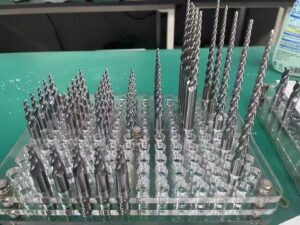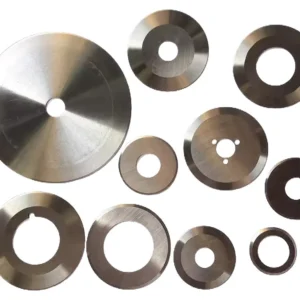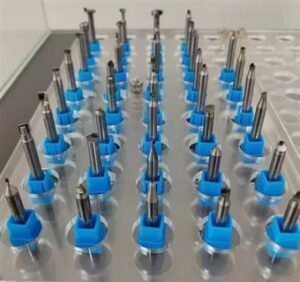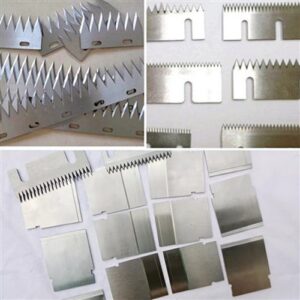
A precision carbide blade rotates at high speed on an intelligent production line, cutting out the contours of an aircraft engine blade with an error of less than one-thousandth of a millimeter. Behind this is a multi-billion dollar CNC cutting tool market and a race for technological innovation.
These "industrial teeth" are evolving at an unprecedented pace.
In 2023, the Chinese cutting tool market reached 53.8 billion yuan and is steadily expanding at an annual growth rate of over 5%. In high-end applications, although the cost of cutting tools only accounts for 3%-5% of the total manufacturing cost, it directly affects more than 70% of processing efficiency and product quality.
01 Industry Status and Growth Drivers
The Chinese CNC cutting tool industry is at a critical juncture, transitioning from quantitative change to qualitative change. According to market research, the Chinese CNC cutting tool market is expected to reach nearly 45 billion yuan by 2030, with a compound annual growth rate exceeding 10%.
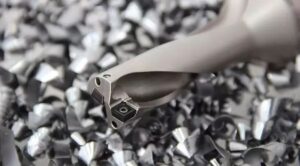
In terms of material composition, cemented carbide cutting tools have become the market mainstream, accounting for 63% of the domestic market in 2023, a significant increase compared to 2014. This change reflects the increased demands of the manufacturing industry on cutting tool performance.
Cemented carbide, with its excellent comprehensive performance, is gradually replacing traditional high-speed steel cutting tools. In the third quarter of 2025, leading companies in the cutting tool industry experienced a turning point in their operations.
Taking OKE and Huirui Precision as examples, OKE's revenue and net profit attributable to shareholders increased by 33.0% and 69.3% year-on-year, respectively, while Huirui Precision achieved a 44.5% increase in revenue and a staggering 915.6% increase in net profit. This data indicates that the industry is shifting from scale expansion to quality improvement and efficiency enhancement.
02 The Three-Tier Market Structure
The domestic cutting tool market competition presents a clear three-tier structure, which is not only a stratification of prices but also a reflection of technological strength and market positioning.
The first tier is dominated by European and American brands such as Sandvik Coromant, Kennametal, and Iscar, which control the high-end customized cutting tool market and primarily operate by providing overall cutting solutions. These companies' products are typically expensive, but thanks to their strong technological foundation and R&D capabilities, they have established unshakeable customer loyalty in high-value-added fields such as aerospace and precision medical equipment.
The second tier is represented by Japanese and South Korean companies such as Mitsubishi Materials, Kyocera, and TaeguTec, which excel in the field of non-customized high-end cutting tools.
Japanese and South Korean brands are characterized by high product versatility and stability, striking a balance between performance and price, making them a reliable choice for many manufacturing companies.
The third tier consists of domestic cutting tool companies represented by Zhuzhou Diamond, Huirui Precision, and Oukeyi. There are numerous companies in this category, mainly occupying the low-to-medium end of the market through price and service advantages. However, it is worth noting that with the advancement of technology and brand building, some leading domestic companies have begun to challenge the mid-to-high-end market.
2025 CNC Cutting Tool Brand Strength Matrix:
Brand Tier | Representative Brands | Core Advantages | Market Positioning
First Tier (Europe/America) | Sandvik Coromant, Kennametal, Iscar, Seco, Walter | Cutting-edge technology, comprehensive solutions, high-end customization capabilities | Ultra-precision machining fields such as aerospace, energy equipment, and high-end medical equipment
Second Tier (Japan/South Korea) | Mitsubishi Materials, Kyocera, Sumitomo Electric, TaeguTec | High stability, excellent cost-effectiveness, good versatility | Mass production fields such as automotive manufacturing, mold processing, and general machinery
Third Tier (China) | Zhuzhou Diamond, Huirui Precision, Oukeyi | Fast response, high cost-effectiveness, localized service | Low-to-medium end market, and gradually penetrating into the mid-to-high-end market
03 Four Major Directions of Technological Innovation
Technological progress in the CNC cutting tool industry is advancing simultaneously along four dimensions: materials science, coating technology, intelligence, and multi-functionality.
In terms of material innovation, in addition to traditional cemented carbide, high-speed steel, and ceramic materials, superhard materials such as polycrystalline diamond (PCD) and cubic boron nitride (CBN) are becoming solutions for difficult-to-machine materials. These new materials enable cutting tools to handle materials that were traditionally difficult to machine, such as high-temperature alloys and composite materials.
The progress in coating technology is equally noteworthy. At the 2025 ITES Shenzhen Industrial Exhibition, NS Tool showcased its MPX coating developed for SUS420J2 high-strength steel, which can achieve more than double the tool life compared to previous products. Huarui Precision has launched its "Kirin Series" high-temperature alloy machining tools through the synergistic optimization of nanocrystalline coatings and substrate material properties, effectively solving the problem of traditional tools easily degrading under high-temperature conditions.
Intelligentization has become a clear direction for tool development. Huarui Precision's newly released "Smart Plus" industrial software has equipped CNC machine tools with a "smart brain."
Based on high-precision sensors and AI algorithms, this system achieves multi-dimensional monitoring and intelligent prediction of the entire cutting process. It not only improves processing efficiency but also monitors tool wear and chipping in real time, and warns of machine collision risks.
Multi-functional composite tools are changing traditional processing modes. Multi-functional tools such as turning-milling composite tools can be used in multiple processes for complex parts processing, significantly improving efficiency and reducing costs in multi-axis machining.
04 Localization Process and Substitution Opportunities
The localization process of Chinese CNC cutting tools is accelerating. According to the "Fifth Cutting Tool User Survey and Analysis Report," 43.20% of enterprises currently use domestic tools at a rate between 40% and 60%.
While this data shows that domestic tools have become an important component for many enterprises, it also reflects that there is still considerable room for substitution in high-end fields.
Looking at import data, in the first half of 2025, China's tool exports were 3.14 times its imports, with exports continuing to grow while imports slightly decreased. Specifically, imports of coated inserts decreased by 5.79% year-on-year, while imports of uncoated inserts increased by 0.55% year-on-year.
This data change indicates that domestic tools have begun to make progress in some product areas with higher technological barriers.
Market penetration process of domestic CNC cutting tools:
Domestic Tool Usage Ratio | Percentage of Enterprises | Trend Change
40%-60% | 43.20% | Significant growth
20%-40% | 29.40% | Initial growth followed by decline
60%-80% | 11.80% | Relatively stable
Above 80% | Relatively small | Initial decline followed by a slight rebound
Leading domestic enterprises are breaking through technological barriers through differentiated strategies. Huarei Precision's "Four Highs and Four Refinements" quality development model is worth noting: "Four Highs" refers to high customization, high efficiency, high precision, and high reliability; "Four Refinements" refers to precise marketing, lean operations, continuous innovation, and meticulous service.
This systematic development model is helping domestic tool companies build complete competitiveness from products to services.
05 Selection Strategies and Procurement Considerations
Facing a diverse range of tool brands and products, manufacturing companies need to establish a scientific tool selection and management system. When choosing tool suppliers, companies should not only consider initial procurement costs, but also adopt a total cost of ownership (TCO) evaluation framework.
In actual procurement decisions, companies need to consider several key dimensions: processing material characteristics, production batch size, precision requirements, equipment compatibility, and technical support capabilities. For large-volume continuous production scenarios, tool stability and lifespan are crucial; while for small-batch, multi-variety production, rapid tool change and flexible adjustment capabilities are more critical.
With the development of digital tool management, companies can leverage tools such as Zoller's TMS tool management software, integrating tool information management, CAM simulation interfaces, and production process optimization based on digital twin technology, making tool resource management more orderly and efficient.
06 Emerging Applications and Future Prospects
The CNC tool industry is experiencing new growth opportunities, with emerging fields such as humanoid robots and PCB drill bits creating incremental markets.
In the PCB industry, the demand for high-performance computing driven by AI development is driving the upgrading of copper-clad laminate materials, which in turn directly increases the difficulty of drilling. High-value coating drill bit companies such as Dingtai Gaoke are therefore seizing development opportunities.
The humanoid robot industry has opened up a new market for high-end tools. Leading tool companies such as Huarei Precision and Oukeyi have already entered the humanoid robot tool field. It is estimated that by 2029, the global humanoid robot industry will reach US$32.4 billion, with a compound annual growth rate of 57% from 2023 to 2029.
From a macroeconomic perspective, the stabilization and improvement of the Producer Price Index (PPI) provides a favorable environment for the tool industry. In October 2025, the PPI increased by 0.1% month-on-month, achieving its first increase of the year. This change signals a marginal improvement in pricing pressure and profitability in the industrial economy, providing support for a boost in demand for general equipment.
On the intelligent production line, in Huarei Precision's "dark factory," robotic arms move flexibly, and AGV logistics vehicles shuttle in an orderly manner, with almost no human workers in sight.
Here, the entire process, from substrate preparation and coating treatment to final packaging, is fully automated. CNC cutting tools are no longer just cutting tools; they are the nerve endings of intelligent manufacturing, transmitting data in real time through sensors and optimizing cutting parameters with AI algorithms.
As Chinese manufacturing moves towards high-end production, and as "Made in China" transforms into "Intelligent Manufacturing in China," these precise "industrial teeth" will tackle the toughest challenges in terms of precision and set new records in efficiency.