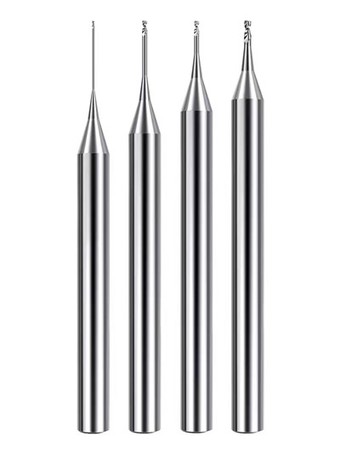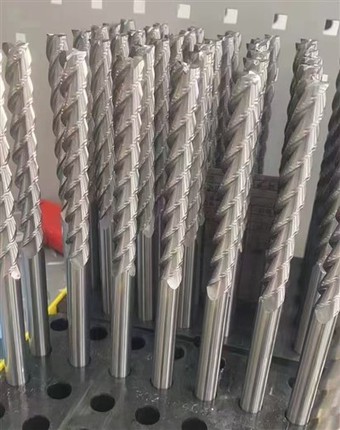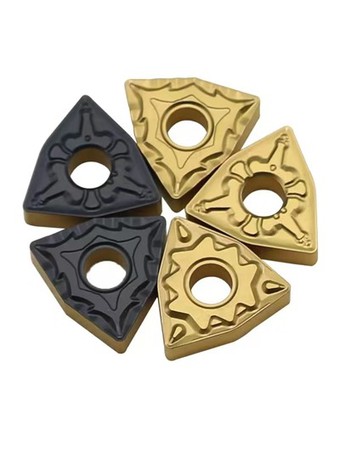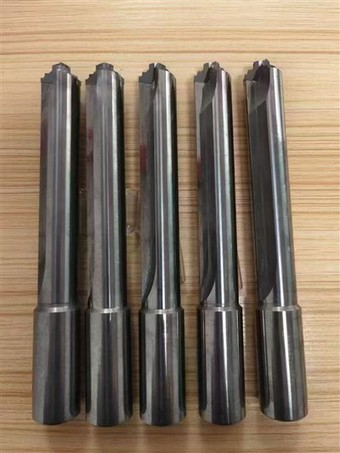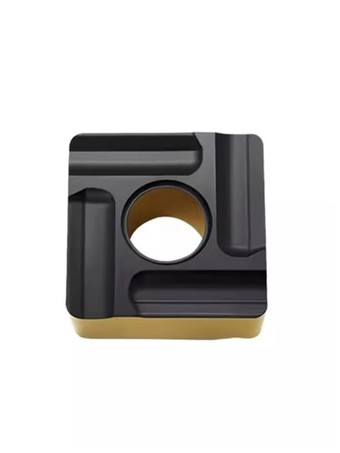
You Offer: Fully detailed engineering drawings (with key dimensions such as cutting diameter, shank diameter, flute length, overall length, helix angle, number of flutes, groove profile, etc.), material specifications (e.g. particular grades of submicron grain carbide), coating specifications (e.g. TiAlN, AlCrN, DLC, nano-composite coatings), precision requirements (e.g. runout tolerance, edge honing requirements), and packaging instructions (individual clamshells, plastic trays, label information).
Detailed discussion: Suppliers and manufacturers discuss technical aspects such as rake angle, clearance angle, core strength design, DFM optimization, alternatives like cheaper coatings with same performance, cost estimation and preliminar quotation, lead times, etc.
Finalize the details: confirm final product details, unit price, MOQ, payment terms (usually T/T, L/C, deposit + balance), delivery schedule (order to shipment time), delivery terms (FOB, CIF, DDP, etc. .), quality standards and acceptance procedures (such as DIN/ANSI/JIS standards, AQL sampling level), IPownership (express stating the design ownership is yours).
Sign agreement: Conduct the signing of a formal purchase or OEM cooperation contract that defines the rights and obligations between the parties, including confidential information, liabilities, etc.
If special jigs, special grinding wheels or inspection fixtures are required, These fees (tooling fees) are generally at your expense and the rights for ownership / usage are defined within the agreement.
Initial Samples: We will produce a small number of samples (usually 3-10 pieces).
Sample Pre-testing: This is crucial! Upon receiving the samples, you must rigorously perform the following tests:
Dimensional Inspection: Use precision instruments to check all critical dimensions and tolerances.
Visual Inspection: Check for texture, coating uniformity, chipping, scratches, etc.
Performance Testing: Perform actual cutting tests on your substrate (stainless steel, titanium alloy, high-strength steel, low-carbon steel, aluminum alloy, etc.) to observe cutting force, surface finish, tool life, wear resistance, chipping resistance, and chip removal performance. Cutting parameters (speed, feed rate, depth of cut, width of cut, cooling method).
Feedback and Improvement: We will provide you with feedback on the test results. If problems occur (e.g., tool life not meeting targets, vibration), the manufacturer needs to investigate the cause (potentially material, heat treatment, grinding process, coating parameters, etc.) and improve their processes. We will repeatedly re-inspect the samples until they fully meet the requirements. Sample Confirmation.
Place Order: Issue a formal purchase order based on forecasts or sales plans.
Raw Material Procurement: We purchase materials based on confirmed products.
Manufacturing: Precision grinding (roughing, finishing), possible edge honing, cleaning, coating (per confirmed type and process), laser marking (your brand logo, specifications).
In-process QC: Our performs strict process inspections (e.g., dimensional sampling post-grinding, coating thickness/adhesion sampling post-coating).
Final Inspection: Conduct 100% or AQL-standard visual checks on finished goods, plus sampling of key dimensions (e.g., cutting diameter runout). Issue Certificate of Analysis (CoA).
Packaging shall be done in accordance with the contract requirements (including rust prevention, inner packaging, outer packaging).
Arrange logistics.
Kindly provide the relevant documents (Invoice, packing list, bill of lading, analysis certificate).
| Item | Power | 240KW | 300KW | 360KW | 420KW |
| Input | Input Voltage | 400V±15%/440V±15%/480V±15% | |||
| Input Voltage Type | TN-S(Three Phase Five Wire) | ||||
| Working Frequency | 45~65Hz | ||||
| Power Factor | ≥0.99 | ||||
| Efficiency | ≥94% | ||||
| Output | Rated Voltage | CHAdeMO 500Vdc; CCS 1000Vdc; GBT 1000Vdc | |||
| Max. Output Current | CHAdeMO 125A; CCS 200A; GBT 250A; | ||||
| Interface | Display | 8'' LCD Touchscreen | |||
| Language | Chinese, English, French, German, Spanish, Russian, etc. | ||||
| Payment | Mobile APP/RFID/POS | ||||
| Communication | Network Connection | 4G(GSM or CDMA)/Ethernet | |||
| Communication Protocols | OCPP1.6J or OCPP2.0 | ||||
| Working Environment | Working Temperature | -30°C ~ +50°C | |||
| Storage Temperature | -35°C ~ +55°C | ||||
| Operating Humidity | ≤95% Non-Condensing | ||||
| Protection | IP55 | ||||
| Acoustic Noise | <60dB | ||||
| Cooling Method | Forced Air-Cooling | ||||
| Mechanical | Dimension(W x D x H) | 800mm*940mm*2200mm | |||
| Cable Length | 5m or 7m | ||||
| Regulation | Certificate | TUV CE/IEC61851-1/IEC61851-23/IEC61851-21-2 | |||
| Charging Interface | DIN70121/DIN70122/ISO15118 | ||||
In the ODM mode, the buyer mainly gives us the product idea, the performance requirement and the market positioning. We are product design, development and manufacturing lead. The end product carries the buyers branding. The design IP is in most cases owned by us or is co owned in a joint venture by both sides.
●
The buyer suggested: Intended use (what materials are you machining? e.g. high-silicon aluminum, superalloys, composites), key performance indicators (KPIs) (20% longer tool life than existing supplier, or ability for higher feed rates), cost range, target market (high-end, mid-range, economy), and overall look and feel (brand color scheme, etc.). give a "Requirement Specification" rather than a detailed drawing.
Buyers evaluate the proposed concepts, selecting one or more directions for refinement. Both parties reach preliminary agreement on the chosen concept(s).
Specify the cooperation model (exclusive/non-exclusive), development cost (NRE - Non-Recurring Engineering) sharing (you may pay part of it), IP ownership (Who owns design patents/copyrights? usage rights?), future product pricing schema, MOQ, NDA. Sign an ODM Letter of Intent or Framework Agreement.
■ Wholesaler Leads:
●Detailed structural design
●Material selection
●Coating selection & processing development
●Possible Finite Element Analysis
●Establish the detailed process route for production and the standards for inspection.
■Your Review: The wholesaler submits We submit a post-critical design status report to the buyer for review and approval.
● Prototype Build: We produce a batch of prototype tools
● Internal Testing: We conduct preliminary cutting performance tests, life tests, and destructive tests, and optimize the design/process based on the results.
Give detailed feedback on test reports to buyers, the final design and process flow are frozen ("design freeze").
Make final production samples. Both sides endorse the sample approval form.
Claim Buyers can pilot such deployments to solicit feedback and market validation.
Just like the OEM in mass production stage, but based on the ODM design. Packaging is customized buyers brand.
Based on market feedback and usage data, collaborate on possible product iterations/updates.
You may have the following questions. If you would like to ask further questions, please click the button below and submit.
(Lifespan Issues) Excessive Cutting Speed: This is the most common cause of thermal wear. It is recommended to reduce the speed by 10%~20%. Material Mismatch: For example, using a P-type cutting tool designed for steel to machine stainless steel (M-type) will result in severe tool sticking and diffused wear. Poor Cooling: Carbide is heat-resistant but not thermal shock-resistant; violently fluctuating cooling water can cause thermal cracking of the cutting tool.
CVD (Chemical Vapor Deposition): Thicker coating, excellent wear resistance, suitable for medium-to-high cutting speeds in continuous cutting (such as high-volume roughing of steel parts).
PVD (Physical Vapor Deposition): Thinner coating but extremely sharp cutting edge, good toughness, suitable for interrupted cutting, finishing, and machining of stainless steel and heat-resistant alloys.
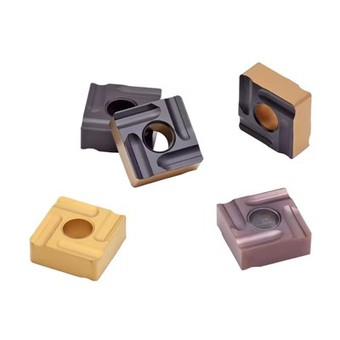
This belongs to the ISO international standard code:
C (Shape): Blade shape (C is an 80-degree rhombus).
N (Back Angle): 0° back angle (suitable for double-sided use, robust).
M (Tolerance): Manufacturing precision grade of the blade.
G (Groove/Center Hole): Denotes a centered hole and dual-side chip pockets.
Entry Angle: Observe the insert entering the workpiece. If it comes in directly at the center line the impact is the strongest.. It will be easier to offset the end mill so that the entry point is off center.
Too Many Teeth: Too many teeth cutting at the same time will cause overload if the machine tool power is weak.
Reduce the overhang: Use the shortest cutter stickout length possible.
Unequal pitch/unequal helix: An asymmetric end mill design out of phase with the honeypot vibration, this shape will eliminate/break the resonance and significantly reduce vibration.
Change parameters: You can try to adjust the speed of rotation to avoid the natural frequency of the machine tool
Consult now to learn more about preferential information.