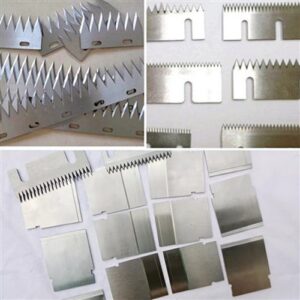
High-performance tool materials are the fundamental condition for ensuring the efficient operation of tools. The cutting part of the tool works under intense friction, high pressure, and high temperatures, and should meet the following basic requirements:
High hardness and high wear resistance.
The hardness of tool materials must be higher than that of the material being processed to cut metal. This is a fundamental requirement for tool materials, and currently, the hardness of most tool materials is above 60 HRC. The harder the tool material, the better its wear resistance. However, due to the complex cutting conditions, the wear resistance of the material is also determined by its chemical composition and the stability of its microstructure.
Sufficient strength and impact toughness.
Strength refers to the ability of the tool material to resist cutting forces without causing the cutting edge to chip or the tool shank to break. It is generally represented by bending strength.
Impact toughness refers to the ability of the tool material to maintain its cutting edge under intermittent cutting or impact conditions. In general, the higher the hardness, the lower the impact toughness, making the material more brittle. Hardness and toughness are a contradictory pair, and balancing them is a key challenge for tool materials.
High heat resistance.
Heat resistance, also known as red hardness, is a key indicator for evaluating the performance of tool materials. It comprehensively reflects the ability of the tool material to maintain hardness, wear resistance, strength, oxidation resistance, anti-welding, and resistance to diffusion at high temperatures.